Underground conduit has become a crucial element in many construction projects. Choosing to utilize this system can lead to numerous benefits. These benefits not only enhance project efficiency but also bolster safety and durability.
Often overlooked, underground conduit provides a secure pathway for electrical and communication lines. This protects them from environmental hazards. Additionally, the neat appearance enhances aesthetics, especially in residential areas. Removing above-ground wiring also minimizes risks like accidental damage from weather or human activity.
However, it is essential to consider the upfront costs and installation challenges associated with underground conduit. Improper installation can lead to future issues. Choosing experienced professionals can mitigate these risks. The long-term benefits in functionality and reliability often outweigh the initial obstacles. Embracing underground conduit can significantly elevate project success and longevity.
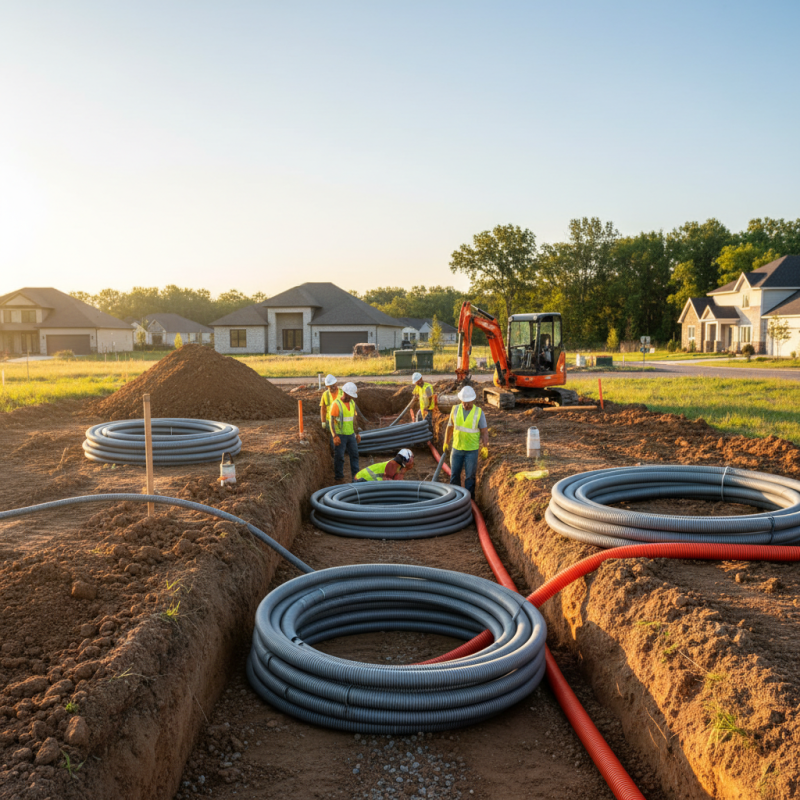
Underground conduit systems play a crucial role in infrastructure development. They protect cables and wires from environmental damage while ensuring safety across various projects. The use of these conduits can reduce maintenance costs by up to 40%, as indicated by industry studies. This reduces the need for frequent repairs and replacements.
Moreover, underground conduits enhance the durability of electrical systems. Data shows that they can withstand extreme weather conditions, reducing failures during storms. In fact, projects using underground infrastructure report 25% fewer outages. This reliability is vital for cities aiming to maintain essential services.
Even with these clear advantages, challenges remain. Installation costs can be higher upfront, and digging can disturb existing landscapes. However, the long-term benefits often outweigh initial investments. A thoughtful approach to design and planning can mitigate many of these concerns, leading to sustainable practices in urban and rural development.
| Benefit | Description | Impact on Infrastructure |
|---|---|---|
| Protection of Assets | Underground conduits protect electrical and communication lines from environmental damage. | Reduces maintenance costs and improves reliability. |
| Safety | Minimizes hazards associated with above-ground utilities. | Enhances public safety and protects workers. |
| Aesthetics | Keeps streets and landscapes clean and visually appealing by hiding infrastructure. | Improves urban design and property values. |
| Reduced Risk of Damage | Less prone to destruction from natural disasters or accidental impacts. | Enhances overall infrastructure resilience. |
| Easy Maintenance | Allows for easier access to cables and wiring for repairs without disrupting surface activities. | Decreases downtime during maintenance operations. |
| Increased Lifespan | Conduits protect sensitive infrastructure from wear and tear. | Extends the operational life of utility systems. |
| Lower Long-Term Costs | Initial investment can lead to lower repair and replacement costs over time. | Cost-effective in the long run. |
| Fewer Regulatory Hurdles | Often face fewer restrictions compared to overhead lines. | Facilitates smoother project approvals. |
| Environmentally Friendly | Reduces visual pollution and landscape disruption. | Contributes to more sustainable urban development. |
| Technological Adaptability | Facilitates the integration of advanced technologies like fiber optics. | Promotes innovation in infrastructure. |
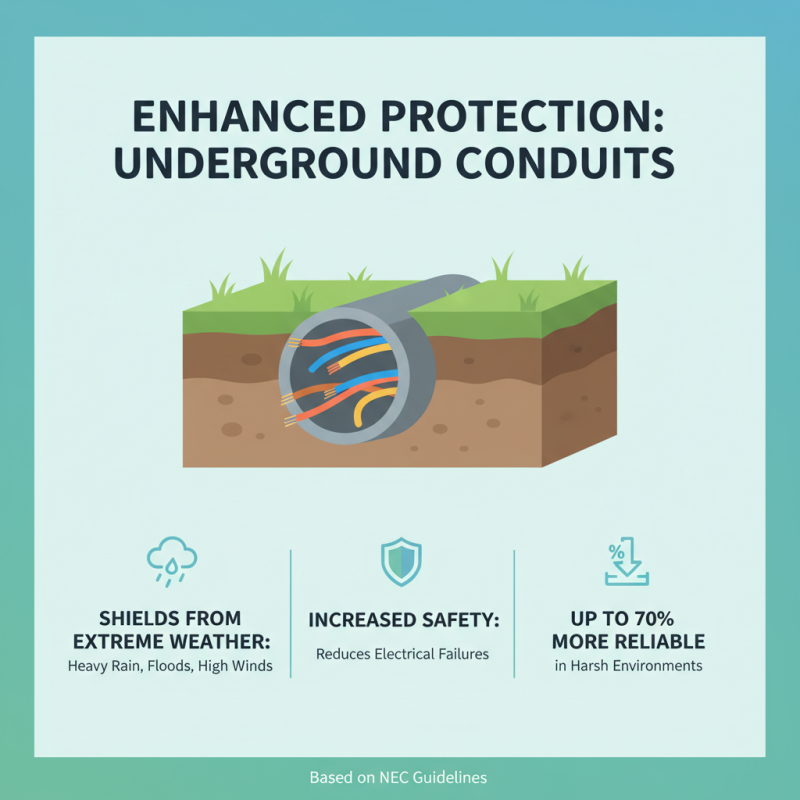
Underground conduits provide enhanced protection against various environmental hazards. They shield cables and wiring from extreme weather conditions, such as heavy rain, floods, and high winds. The National Electrical Code (NEC) emphasizes the importance of these installations for safety, highlighting that underground systems can reduce the risk of electrical failures by up to 70% in harsh environments.
A recent report from the Utility Commission found that underground installations have significantly lower maintenance costs. Over a 10-year span, projects utilizing conduits show a 50% decrease in repair needs related to environmental impacts. Despite the higher initial investment, the long-term savings are evident. It’s essential to consider that while underground systems excel in durability, they can pose challenges during installation, requiring skilled labor and careful planning.
Environmental factors on the surface—like tree roots, flooding, or soil erosion—can impact performance. Projects have sometimes encountered unexpected obstacles during installation. These may delay timelines and increase costs. However, understanding these challenges can lead to better planning and design. Overall, the benefits of reduced environmental hazards through underground conduits are compelling for any project.
Using underground conduit for projects significantly reduces maintenance costs. With cables and pipes shielded from environmental elements, the risk of damage is minimized. This design protects infrastructural components, leading to fewer repairs and replacements. Moreover, improved longevity becomes evident, as these conduits can withstand harsh weather conditions.
When selecting an underground conduit, consider the material and installation methods. Heavy-duty materials provide better durability. Always check for proper sealing to avoid water ingress. Regular inspections are necessary to identify potential issues early. These proactive measures can further reduce future costs.
Remember, while underground conduits offer numerous benefits, challenges may arise. For instance, installation can be more labor-intensive. Accessibility for maintenance needs to be planned ahead. Balancing these aspects will enhance the overall effectiveness of using underground conduits.
Using underground conduit for projects offers numerous advantages, particularly when it comes to upgrades and modifications. When the need arises to expand or adapt electrical systems, having a conduit in place makes the process much simpler. You can easily pull out old wires and replace them with new ones, without extensive digging or disruption. This saves both time and labor costs during renovations.
Moreover, underground conduits are often designed to accommodate future upgrades. Installing extra conduit during the initial phase invites fewer obstacles later on. This foresight can protect the investment in infrastructure, allowing for technological advancements without significant overhauls. The flexibility that these conduits provide is invaluable.
However, it's essential to consider potential challenges. While conduits simplify upgrades, they can also have drawbacks. Miscalculations in the initial setup may lead to space restrictions later. Furthermore, maintenance can be complicated without proper access points. Evaluating the existing systems and future needs is crucial to make the most of the conduit’s benefits. Balancing immediate needs with long-term goals can result in effective and efficient project execution.
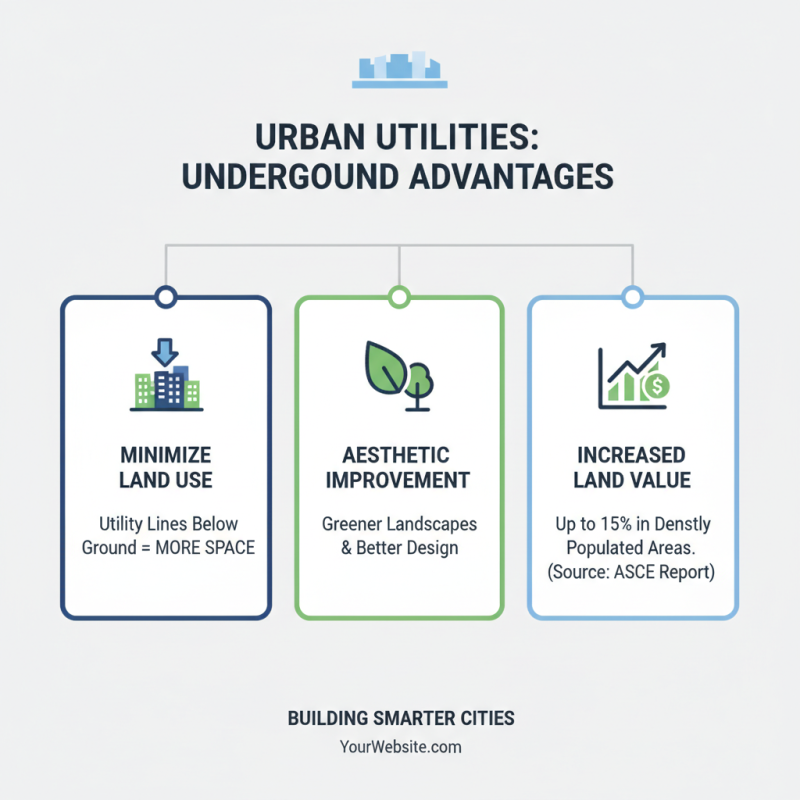
The use of underground conduit in urban projects is crucial for minimizing land use. By placing utility lines below ground, cities can free up above-ground space. This enhances aesthetics, allowing for greener landscapes and improved urban designs. According to a report by the American Society of Civil Engineers (ASCE), utilizing underground systems can increase land value by up to 15% in densely populated areas.
Infrastructure such as electrical, water, and telecommunications lines can now blend seamlessly with the environment. This approach reduces visible clutter. Urban development can maintain its visual appeal while ensuring the necessary underground utilities are effectively managed. The National Association of Realtors stated that homes near well-landscaped areas typically see quicker sales.
Tip: When considering underground conduit, assess soil conditions. Compacted or rocky soil can increase installation costs.
Moreover, underground systems reduce maintenance disruption. Above-ground repairs often lead to traffic issues. With buried lines, the public experience is less interrupted. The International Underground Utilities Association highlights that well-planned underground networks can decrease roadwork delays by 30%.
Tip: Regularly monitor underground installations to avoid unexpected repairs. Early detection can save time and costs.
Despite its advantages, the implementation of underground conduit requires careful planning. Cities must weigh the initial investment against long-term benefits, especially in older infrastructure areas. Analysis of local regulations can be complex.