How to Choose the Right Fire Alarm Cable?
Choosing the right fire alarm cable is a safety decision, not a simple purchasing task. The cable must support reliable alarm signals when heat, smoke, or damaged equipment threatens normal building operations. A low price may appear attractive, yet unsuitable insulation can crack, melt, or create unnecessary signal problems. Small details matter.
This guide examines conductor size, insulation type, shielding, temperature rating, voltage drop, and circuit integrity. It also considers whether the cable suits indoor spaces, risers, damp areas, or plenum environments. Always compare product data with the fire alarm system manufacturer’s requirements and the installation rules accepted in your region. A cable that works well in one building may be unsuitable in another. Check the environment carefully.
On practical projects, installers often focus on cable length and forget connector quality, routing, or future maintenance access. That mistake can complicate testing months later. Clear markings help. So does careful documentation. However, labeling alone does not prove performance. Independent certification, traceable specifications, and inspection by a qualified professional provide stronger evidence. No cable removes every risk. The complete system must be designed, installed, tested, and maintained correctly. Even experienced teams can overlook voltage drop at the farthest detector. A final review is worthwhile. Use this introduction to assess technical requirements with a safety-first mindset, question vague supplier claims, and choose a fire alarm cable that matches the building, the system, and the expected installation conditions.
Define Fire Alarm Cable Types and Their Applications
How to Choose the Right Fire Alarm Cable?
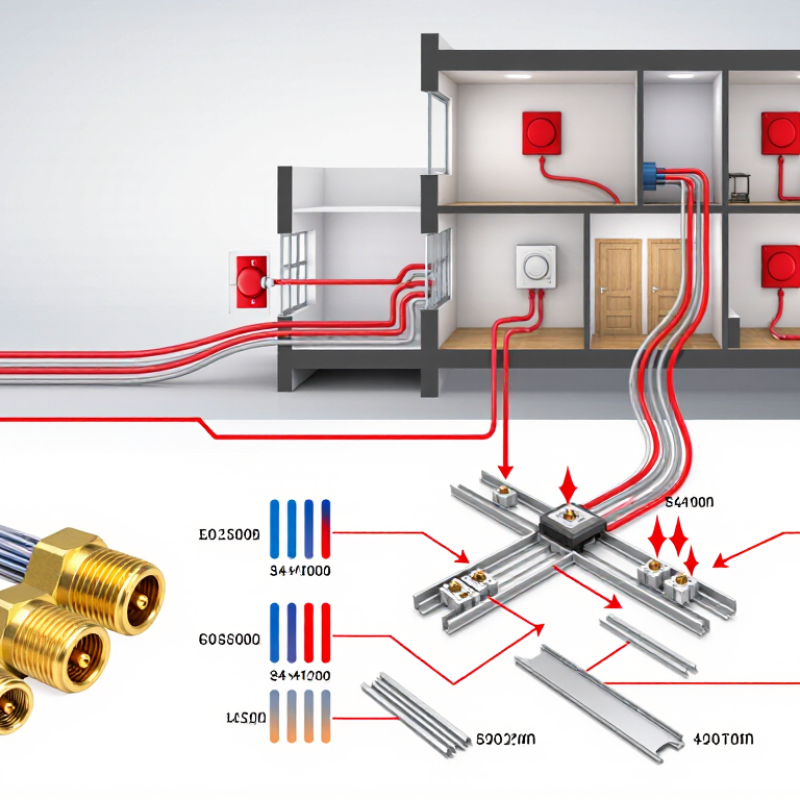
Fire alarm cable types serve different building conditions and system functions. FPL cable suits exposed, power-limited circuits in ordinary spaces. FPLR cable is designed for vertical runs between floors. FPLP cable fits air-handling spaces, such as ceiling plenums, where smoke can travel quickly. These classifications should match the cable’s listing and the installation environment, not only its price.
NFPA’s Fire Loss in the United States During 2022 reported about 1.5 million fires and 3,790 civilian fire deaths. Reliable signaling remains essential. Addressable systems commonly use twisted-pair circuits for communication between panels and devices. Shielded cable can help reduce electrical interference, especially near motors or fluorescent equipment. Unshielded cable may work well in quieter environments. NFPA 72 also stresses correct circuit performance, supervision, separation, and testing. Cable size depends on distance, current, voltage drop, and the manufacturer’s listed system limits.
Tips: Check the required FPL, FPLR, or FPLP rating before purchasing. Measure the longest circuit, not the average one. Confirm conductor size and temperature rating. Keep fire alarm wiring separated from power conductors where required. A neat cable tray is not enough. Poor routing can still create faults. Experienced installers also leave service loops near panels and devices, although excessive slack can complicate inspections. No cable choice fits every building. Recheck the design against NFPA 72 and local approval requirements.
Check Safety Standards, Ratings, and Building Code Requirements
Choosing fire alarm cable begins with the building code, not the cable shelf. Requirements vary by country, building type, and installation area. In the United States, Article 760 of the National Electrical Code addresses power-limited fire alarm circuits. NFPA 72 provides guidance for installation, testing, and maintenance. In other regions, standards such as EN 50200 or CPR classifications may apply. Confirm the current edition with the authority having jurisdiction.
Cable ratings matter in real spaces. FPL suits general areas, while FPLR is intended for vertical runs. FPLP is designed for plenum spaces, where air moves through ceiling voids or raised floors. Check smoke, flame, temperature, and circuit-integrity ratings. A cable passing through a shaft may need a higher rating than one installed above an ordinary ceiling. Keep fire alarm wiring separated from incompatible power circuits, and protect exposed runs from physical damage.
Look closely at the whole installation. A cable may carry the correct marking but fail when paired with unsuitable supports, glands, or terminations. Fire-rated pathways also depend on approved penetrations and properly sealed openings. I have seen projects focus on cable labels while overlooking a damaged jacket near a metal tray. That small defect deserved attention. Review the product data, verify conductor size and voltage, and record test results after installation. Recheck the code before ordering; assumptions age quickly.
How to Choose the Right Fire Alarm Cable?
The chart shows the typical installation coverage of power-limited fire alarm cable classifications under U.S. fire alarm wiring practice. FPL is intended for general-use spaces, FPLR is listed for vertical or riser applications, and FPLP is listed for plenum spaces where smoke and flame performance requirements are stricter. Always verify the cable listing, local building code, NFPA 70 Article 760, NFPA 72, UL 1424, and the requirements of the authority having jurisdiction.
Match Cable Construction to Installation Conditions
How to Choose the Right Fire Alarm Cable?
Match Cable Construction to Installation Conditions
Cable selection should begin with the installation environment, not only the panel specifications. A cable that performs well in a clean, dry corridor may struggle in a damp plant room.
For indoor spaces, check the insulation, conductor size, temperature rating, and required fire-performance classification. Plenum areas need materials that limit smoke and flame spread. Vertical shafts may require a different riser-rated construction. Always confirm the classification against current local fire codes and project requirements.
Moisture changes the decision. Outdoor runs, parking structures, and unheated buildings may need water-resistant jackets and stronger mechanical protection. Where power cables or motors create electrical noise, shielding can reduce unwanted interference. Keep separation between circuits when the installation standard requires it. Small details matter.
I once saw a neat cable route fail inspection because its jacket rating did not match the air-handling space. The cable looked suitable. It was not.
Consider conductor flexibility, pulling distance, bend radius, and termination space before ordering. A heavily protected cable can be reliable, but it may become difficult to install in crowded conduits. Conversely, a thin construction may save space while offering too little protection against impact or moisture.
Field conditions are often less perfect than drawings suggest. Check the route personally when possible. Record temperature, exposure, support spacing, and nearby electrical equipment. Then verify the cable’s test documentation and installation instructions before work begins. Testing after installation can reveal damage that visual checks miss.
Choose the Correct Size, Shielding, and Fire Resistance
Choosing fire alarm cable starts with the circuit, not the cable label.
Calculate conductor size from total loop length, alarm current, ambient temperature, and permitted voltage drop. A small conductor may operate a short test circuit but fail at the farthest notification appliance. NFPA 72, National Fire Alarm and Signaling Code, requires installation decisions to match system design and listed equipment instructions. Check the calculation twice. Field assumptions can be wrong.
Shielding matters where motors, variable-frequency drives, fluorescent lighting, or radio equipment create electrical noise.
Use a properly grounded shield only when the system design requires it. An unnecessary shield can add capacitance and complicate termination. Keep signal and power conductors separated according to applicable codes. In commissioning, inspect every drain-wire connection. One loose termination can create intermittent faults that are difficult to reproduce.
Fire resistance is a separate decision.
Select cable ratings such as FPL, FPLR, or FPLP according to the wiring method, space, and local code. Where circuits must operate during fire exposure, review circuit-integrity requirements and test methods such as IEC 60331. NFPA reported 1,388,500 fires and 3,670 civilian fire deaths in the United States during 2023, showing why survivable signaling paths deserve careful design. The report does not prove that thicker cable prevents every failure. That conclusion would be too simple. Verify conductor size, shielding, temperature rating, support method, and fire-performance documentation before installation.
Compare Product Quality, Compatibility, and Long-Term Value
How to Choose the Right Fire Alarm Cable?
Compare Product Quality, Compatibility, and Long-Term Value
Choosing fire alarm cable is not simply a matter of selecting the lowest price. In field inspections, small details often reveal quality: clean jacket extrusion, clear markings, consistent diameter, and copper conductors without dark patches. Ask for test records, temperature ratings, smoke characteristics, and evidence of production control. A cable should match the fire alarm panel, detectors, terminal blocks, and installation method. Check conductor size, insulation type, shielding, polarity requirements, and maximum circuit distance before ordering.
Compatibility prevents expensive surprises. A cable that works in a dry ceiling may perform poorly in damp plant rooms, crowded risers, or areas exposed to vibration. Review project specifications and local installation rules with a qualified engineer. Confirm bend radius and pulling tension. Test sample lengths before full installation. It is a modest step, but it can expose brittle jackets or difficult termination.
Long-term value includes labor, maintenance, and replacement risk. A cheaper cable may become costly if its markings fade or insulation cracks after repeated heat cycles. Keep batch records and spare lengths for future repairs. I once focused too heavily on material price. That was incomplete thinking. Cable quality matters, but documentation and installation discipline matter too. No checklist is perfect. Still, comparing verified performance, system compatibility, and lifecycle cost supports a more dependable purchasing decision.