Why Choose Wire Harness Assembly for Global Sourcing?

Why Choose Wire Harness Assembly for Global Sourcing?

Global manufacturers are reassessing how electrical systems are designed, built, and sourced. Wire harness assembly sits at the center of that decision. It connects sensors, batteries, control units, lighting, and safety equipment through carefully routed conductors. A single loose terminal can stop an entire production line.

Grand View Research reported that the global automotive wiring harness market was valued at approximately USD 49 billion in 2023. Its analysis also projects continued growth through 2030, supported by vehicle electrification, advanced driver-assistance systems, and rising electronic content. These figures are useful, but market definitions differ. Buyers should check whether a report includes industrial, aerospace, or only automotive harnesses.

Automotive manufacturing consultant Sandy Munro has described the wiring harness as “the nervous system of the vehicle.” The comparison is practical. Like nerves, harnesses must reach every critical location while avoiding interference, heat, vibration, and unnecessary length. Proper wire harness assembly can consolidate purchasing, standardize testing, and improve production consistency across facilities.

It is not automatically the cheapest option.

Global sourcing still requires disciplined supplier qualification. Review crimp-force records, continuity-test results, material traceability, and change-control procedures. Ask to see actual samples, not only catalog photographs. A harness that looks clean on a workbench may fail after repeated bending or thermal cycling.

Industry research from MarketsandMarkets identifies electrification and connected vehicles as major growth drivers for harness demand. That opportunity also creates pressure. Suppliers must balance labor costs, regional capacity, compliance, and delivery risk.

The strongest sourcing decision is rarely based on price alone. It depends on dependable engineering, visible quality data, and honest communication when specifications remain imperfect.

Why Choose Wire Harness Assembly for Global Sourcing?

What Is Wire Harness Assembly in Global Sourcing?

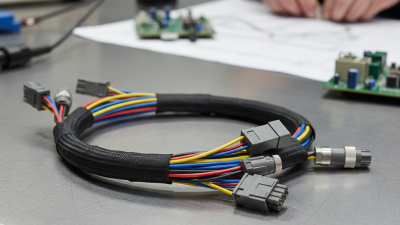
Wire harness assembly is a prepared network of wires, terminals, connectors, sleeves, and protective coverings. It carries power and signals between electrical components. In global sourcing, suppliers build this network from approved drawings and defined material specifications. Each wire is cut, stripped, crimped, routed, and secured into one usable assembly. The finished harness should fit its equipment without forcing bends or stressing connectors.

A reliable sourcing process depends on more than a low quotation. Technical teams review wire gauges, insulation types, terminal compatibility, and operating temperatures. They also confirm samples before larger production. Practical inspections may include crimp-height checks, continuity testing, pull testing, and visual examination. Clear labeling and batch records support traceability across borders. Small details matter. A loose terminal can stop an entire machine.

Tips: Share complete drawings, tolerance requirements, and testing standards. Request a first article sample. Check routing against the real installation space. Keep revision records. Do not assume every supplier interprets a drawing identically. That assumption causes trouble. Wire harness assembly can improve purchasing efficiency, but it is not a magic fix. Communication gaps, packaging damage, or an overlooked bend radius may still create failures. A careful review often reveals weaknesses before production begins.

How Wire Harness Assembly Supports International Procurement

Wire harness assembly gives international procurement teams a practical way to control complex electrical sourcing. Instead of ordering loose wires, terminals, and connectors separately, buyers receive tested assemblies built to defined drawings. This reduces assembly work at the destination site. It can also improve consistency across production locations.

In cross-border projects, documentation matters as much as the harness itself. A reliable supplier should provide material specifications, process records, inspection results, and revision control. Length, color, terminal position, pull force, and continuity require clear checks. Sample approval should happen before volume production. Packaging also deserves attention. Each harness should be protected from bending, moisture, and connector damage during long transport.

Small details often create large delays. A missing label can slow customs inspection or confuse line workers. A drawing with unclear tolerances can cause repeated questions between engineering and procurement teams. Experienced buyers normally confirm these points early through samples and video inspections. They also review capacity, testing equipment, and corrective-action procedures. No sourcing plan is perfect. I have seen teams focus heavily on unit price and overlook packaging labor. That decision looked efficient until the receiving department spent hours sorting damaged parts. A more reliable approach compares total landed cost, delivery risk, and quality evidence. It may require more discussion at the beginning. The result is a clearer supply chain and fewer surprises across borders.

Why Choose Wire Harness Assembly for Global Sourcing? - How Wire Harness Assembly Supports International Procurement

Procurement Dimension Relevant Data or Requirement How Wire Harness Assembly Supports Global Sourcing Recommended Control Point
Product Scope A harness can combine wires, terminals, connectors, seals, clips, labels, protective sleeving, and conduit into one configured assembly. Consolidates multiple purchased components into a single part number, reducing assembly work and coordination at the receiving plant. Approve a controlled bill of materials, connector list, wire list, and assembly drawing.
Quality Standard IPC/WHMA-A-620 provides requirements and acceptance criteria for cable and wire harness assemblies. Creates a common workmanship reference for buyers, suppliers, inspectors, and production teams in different countries. Specify the applicable revision, class, workmanship criteria, and inspection method in the purchase documents.
Electrical Verification Common production tests include continuity, short-circuit detection, incorrect-wiring detection, and dielectric or insulation-resistance testing when required by the design. Objective test records help verify incoming assemblies before they enter international production lines. Define the test points, electrical limits, test coverage, calibration requirements, and record-retention period.
Configuration Control Wire color, conductor size, terminal type, cavity position, branch length, connector keying, and label information are design-controlled characteristics. A standardized harness drawing and revision system reduces interpretation differences across borders and languages. Use revision-controlled drawings, change notices, sample approval, and first-article inspection.
Material Compliance Material declarations may need to address requirements such as EU RoHS restrictions, REACH obligations, or customer-specific substance controls. Supplier documentation can be collected at assembly level instead of being managed separately for every loose wire and terminal. Request declarations, certificates, lot traceability, and evidence for restricted substances relevant to the destination market.
Packaging and Logistics Finished harnesses can be packaged by part number, vehicle or machine position, production batch, or installation sequence. Defined packaging protects terminals and connectors while simplifying customs identification, warehouse handling, and line-side kitting. Specify packaging quantity, moisture protection, bend-radius limits, barcode content, carton labeling, and export documents.
Total Cost of Ownership The purchase price should be evaluated together with incoming inspection, kitting, local labor, rework, inventory handling, packaging, freight, duties, and quality costs. Pre-assembled parts can reduce internal touch points and make landed-cost comparisons more meaningful than component-price comparisons alone. Compare suppliers using a landed-cost model and include tooling, test fixtures, packaging, logistics, and nonconformance costs.
Supply Continuity Critical inputs may include copper conductors, insulation, terminals, connector housings, seals, and protective materials from different supply tiers. A documented assembly platform makes approved alternates, dual sourcing, and component-risk reviews easier to manage. Identify single-source components, define approved alternatives, and require written approval for substitutions.
Traceability Traceability may cover supplier lot, wire and terminal batch, production date, operator or machine, test result, and shipment batch. A single finished-assembly record supports faster containment and targeted recalls across international distribution channels. Define lot coding, inspection records, nonconformance procedures, and minimum traceability depth before production launch.
Supplier Qualification Evaluation commonly covers process capability, crimp quality, test equipment, document control, capacity, delivery performance, and corrective-action systems. A structured qualification process provides comparable evidence when assessing suppliers in different sourcing regions. Use sample builds, capability reviews, process audits, first-article approval, and periodic performance monitoring.

Note: Applicable standards, regulatory obligations, test levels, and documentation requirements depend on the product design, end-use environment, and destination market.

Key Benefits of Choosing Global Wire Harness Suppliers

Global wire harness suppliers can give manufacturers access to specialized capacity, regional materials, and competitive production costs. The strongest benefit is flexibility. A qualified supplier can build prototypes, manage small pilot runs, and scale repeat orders without forcing one factory to handle every stage. In practical sourcing work, this flexibility helps when vehicle, appliance, or industrial equipment demand changes unexpectedly. It also supports dual sourcing, which can reduce disruption when one region faces shipping delays or material shortages.

Not every quote deserves approval.

Reliable suppliers provide more than assembled wires. They should document conductor specifications, terminal compatibility, crimp height, pull-force results, and continuity tests. Clear drawings and revision control prevent a tiny connector change from becoming a costly production error. Good partners also share inspection records, lot identification, and shipment documentation. These details improve traceability across borders and make quality discussions based on evidence, not opinions. Sample approval matters. Before mass production, buyers should inspect routing, labels, bend protection, and fit against the final housing. An experienced engineering review can reveal problems that photographs miss.

Global sourcing still requires careful communication. Time-zone gaps, language differences, and changing specifications can slow decisions. A supplier may meet an initial sample requirement yet struggle with consistent output later. That risk deserves honest attention. Buyers should audit process controls, verify capacity, and review corrective-action records before awarding repeat business. Secure packaging and realistic lead-time planning also protect harnesses from moisture, crushing, and terminal damage during transport. Cost remains important, but the lowest price can hide rework, delays, or weak traceability. A balanced supplier evaluation considers engineering support, testing discipline, responsiveness, applicable requirements, and long-term production stability.

Critical Standards for Quality, Safety, and Compliance

Why Choose Wire Harness Assembly for Global Sourcing?

Critical Standards for Quality, Safety, and Compliance

Global wire harness sourcing can reduce assembly time, but only when quality controls travel with the parts. The IPC/WHMA-A-620 standard defines accepted practices for crimping, soldering, insulation, labeling, and mechanical protection. It also gives buyers a common inspection language across factories. A loose terminal may look minor. Under vibration, it can become a serious failure.

Traceability deserves equal attention. Each harness should connect to a lot number, drawing revision, operator record, and test result. Continuity, hipot, pull-force, and visual tests can expose defects before shipment. The American Society for Quality reports that poor quality may cost 15–20% of sales, and sometimes more. That figure makes cheap rework look less attractive.

Safety and compliance must be verified through documents, not assumptions. Material declarations should address RoHS restrictions and relevant REACH substances. Flammability ratings, insulation temperature limits, and connector approvals must match the final application. International safety guidance also stresses guarding against electric shock, short circuits, and inadequate insulation. Supplier audits should sample real production, not only polished presentations. That is where sourcing plans often become imperfect. A certificate can be current while process discipline quietly weakens. Regular audits, independent testing, and corrective-action records provide stronger evidence. Data should remain reviewable from incoming wire to packed harness.

How to Select and Manage a Global Assembly Partner

Why Choose Wire Harness Assembly for Global Sourcing?

How to Select and Manage a Global Assembly Partner

A reliable wire harness partner can reduce assembly variation, labor pressure, and purchasing complexity. Selection should begin with process evidence, not a low quotation. Review crimp-force monitoring, pull-test records, continuity testing, first-article approval, and operator training. Ask for sample production data, not only certificates. IPC workmanship requirements can support a shared quality language across borders.

Global logistics also deserves careful measurement. McKinsey’s 2020 supply-chain research found that 93% of supply-chain leaders planned to increase resilience. UNCTAD reports that over 80% of global trade by volume moves by sea. Therefore, assess port access, alternate routes, buffer stock, and realistic transit times. The World Bank’s 2023 Logistics Performance Index also evaluates customs, tracking, infrastructure, and delivery timeliness. These indicators help compare locations more objectively. Still, data can hide local problems. A capable factory may struggle with one congested border.

Tips: Build a supplier scorecard covering quality, capacity, engineering response, traceability, logistics, and financial stability. Require lot-level records for terminals, seals, wire, and test results. Define escalation contacts and response times before production starts. Review capacity monthly, especially before seasonal demand. Visit the facility when possible. A video audit is useful, but incomplete.

Do not transfer the entire bill of materials without controls. Use approved alternates, revision management, and change-notification rules. A partner should explain its weaknesses clearly. That honesty is often more valuable than a perfect presentation.

Why Choose Wire Harness Assembly for Global Sourcing?

Selecting and managing a global assembly partner requires more than comparing unit prices. This recommended scorecard prioritizes quality, landed cost, supply continuity, engineering capability, compliance, and logistics responsiveness.

Recommended evaluation weighting: quality and traceability receive the highest priority because wire harness performance depends on consistent process control, inspection, documentation, and reliable supply continuity.